
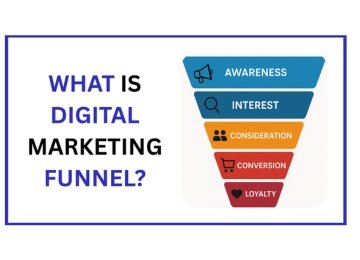
A digital marketing funnel is a step-by-step journey that potential customers go through—from the moment they first discover your brand to the point where they become paying customers, and even loyal advocates. It is called a “funnel” because at the top, you attract a large number of people, but as they move through each stage, only a smaller group continues until they convert.
In simple terms, a digital marketing funnel helps businesses guide the right audience, at the right time, with the right message, ultimately leading to more sales and long-term customer relationships.
Why is a Digital Marketing Funnel Important?
Without a funnel, businesses often struggle with random marketing efforts that don’t produce consistent results. A well-structured funnel ensures that every marketing activity has a clear purpose.
Key Benefits:
- Helps convert visitors into customers
- Improves marketing efficiency
- Builds trust with your audience
- Increases return on investment (ROI)
- Creates a predictable sales process
A funnel gives direction to your marketing strategy instead of relying on guesswork.
Stages of a Digital Marketing Funnel
A typical digital marketing funnel is divided into four main stages:
1. Awareness (Top of the Funnel – TOFU)
This is the first stage where people discover your business for the first time. They may not know about your brand or even realize they have a problem yet.
Goal:
👉 Attract attention and create brand awareness
Strategies:
- Social media posts
- Blog articles
- SEO (search engine optimization)
- YouTube videos
- Paid ads
Example:
A user searches on Google: “How to grow my business online” and finds your blog.
2. Interest (Middle of the Funnel – MOFU)
At this stage, users are aware of your brand and start showing interest. They want to learn more and evaluate your services.
Goal:
👉 Build trust and provide value
Strategies:
- Educational blogs
- Email newsletters
- Free guides or eBooks
- Case studies
- Webinars
Example:
The same user reads more blogs on your website and follows your social media page.
3. Decision (Bottom of the Funnel – BOFU)
Now the user is ready to make a decision. They compare options and look for the best service provider.
Goal:
👉 Convert leads into customers
Strategies:
- Testimonials and reviews
- Service pages
- Pricing pages
- Free consultations
- Limited-time offers
Example:
The user contacts your agency after checking your portfolio and pricing.
4. Action (Conversion Stage)
This is the final step where the user takes action—such as making a purchase or signing up for your service.
Goal:
👉 Close the sale
Strategies:
- Clear call-to-action (CTA)
- Easy checkout or contact process
- Personalized offers
Post-Purchase Stage (Retention & Loyalty)
Many businesses ignore this stage, but it is extremely important.
Goal:
👉 Turn customers into repeat buyers and brand advocates
Strategies:
- Email follow-ups
- Customer support
- Loyalty programs
- Retargeting ads
Example:
You send regular updates and offers to existing clients to keep them engaged.
How a Digital Marketing Funnel Works
A funnel works by gradually moving users from awareness to conversion using different marketing channels.
Step-by-step process:
- Attract users through SEO, ads, or social media
- Engage them with valuable content
- Build trust through consistent communication
- Convert them with strong offers
- Retain them for long-term business
Each stage requires a different type of content and strategy.
Example of a Digital Marketing Funnel
Let’s take a simple example of a digital marketing agency:
- Awareness: A blog post ranks on Google
- Interest: User downloads a free SEO guide
- Decision: User checks your service page
- Action: User contacts you and becomes a client
This structured journey increases the chances of conversion.
Types of Digital Marketing Funnels
There are different types of funnels depending on your business model:
1. Lead Generation Funnel
Focuses on collecting leads through forms, downloads, or sign-ups
2. Sales Funnel
Designed to directly convert users into customers
3. Webinar Funnel
Uses webinars to educate and sell services
4. E-commerce Funnel
Optimized for online stores to increase product sales
Common Mistakes to Avoid
Many businesses fail because they don’t use the funnel properly. Avoid these mistakes:
- Not targeting the right audience
- Skipping funnel stages
- Lack of clear call-to-action
- Poor website experience
- Not tracking performance
Fixing these can significantly improve results.
Tools Used in Digital Marketing Funnel
To build and manage a funnel, businesses use tools like:
- Google Analytics (tracking)
- Email marketing tools
- CRM software
- Ad platforms (Google Ads, Facebook Ads)
These tools help automate and optimize the funnel.
Future of Digital Marketing Funnels
With advancements in technology, funnels are becoming smarter:
- AI-driven personalization
- Automation tools
- Data-driven decision making
- Chatbots for instant interaction
Businesses that adapt to these trends can achieve better results.
Conclusion
A digital marketing funnel is the backbone of any successful online marketing strategy. It helps businesses attract the right audience, nurture relationships, and convert leads into customers in a structured way.
Instead of random marketing efforts, a funnel provides a clear roadmap for growth. By understanding each stage and using the right strategies, businesses can improve conversions, increase sales, and build long-term success.